Functional cognitive stimuli, ready for the next session.
A growing library of evidence-informed cognitive activities for medical SLPs. Free, forever.
Browse the LibraryBegin here with new patients
Internal Memory Strategies
Most activities in this library ask a patient to remember something and recall it later. This section teaches six strategies for doing that: picture it, link it into a sentence, tie a name to something you notice, group it, repeat it, or pull out the key detail. Teaching one before a task gives the patient a method to use.
Cicerone et al. (2019) rate compensatory strategy training a Practice Standard, their strongest recommendation, for mild memory impairment after brain injury or stroke. In mild cognitive impairment, a randomized trial of this kind of training found less memory decline five years later than in untrained controls (Belleville et al., 2024). Gains show up most clearly on the material patients practice. Carryover to everyday activities has been harder to demonstrate. For severe impairment, the same review recommends errorless learning and external aids, which the library covers separately.
A closer look at what’s inside
A few of the activities clinicians reach for most, from transfer-safety video libraries to medication management and health-literacy practice.
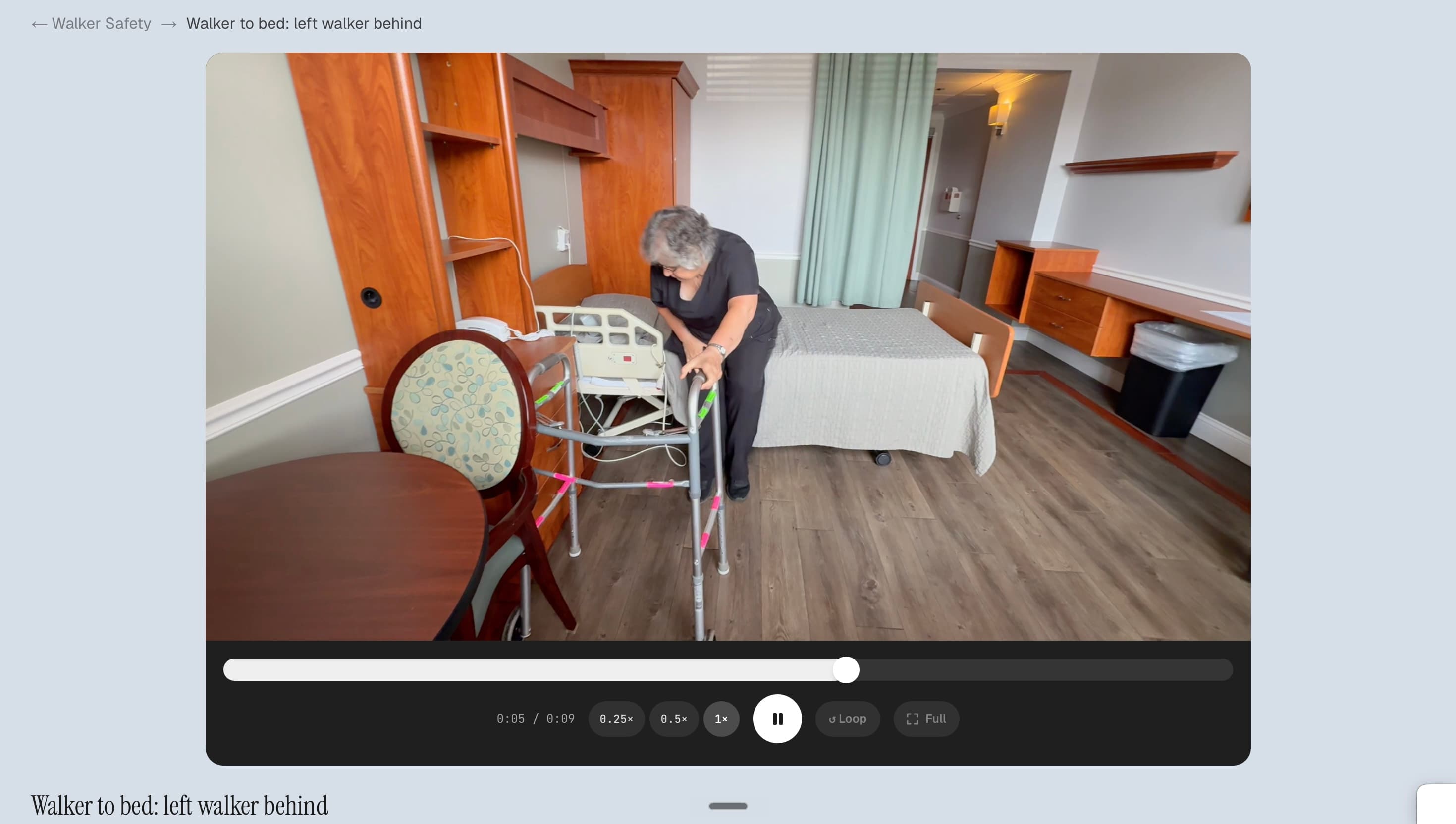
Safety Videos
Side-by-side reference clips of real bed-to-wheelchair transfers. See safe technique next to common errors like unlocked brakes. Slow-motion and loop controls let patients study each step.
Explore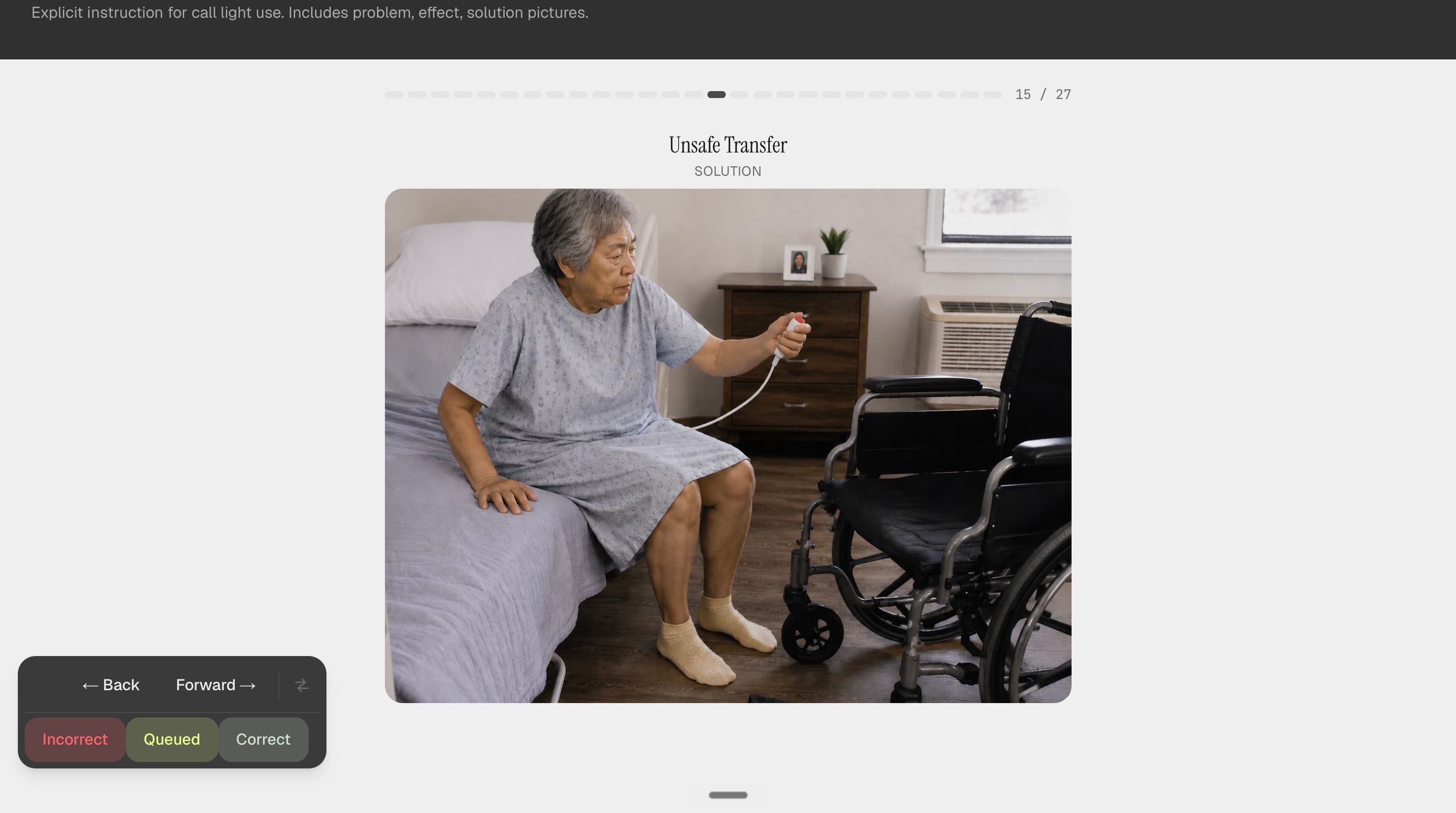
Problem-Solving Scenarios
Real photos of household hazards. Toggle structured prompts (what's the problem, the consequences, the solution) and score the patient's reasoning one scene at a time.
Explore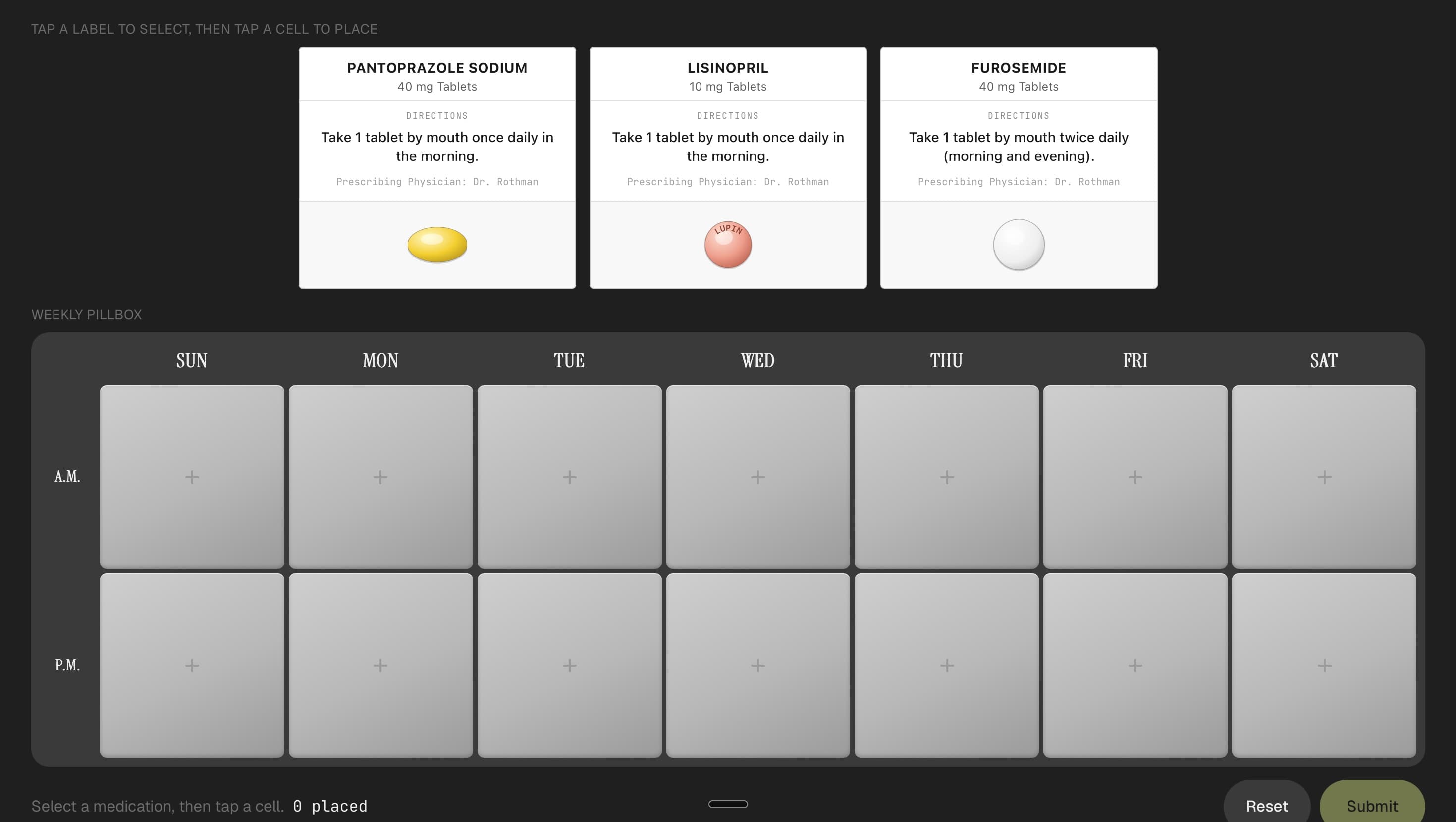
Medication Management
Read authentic prescription labels, then place the right pills into a weekly pillbox. Three tiers build from a simple two-drug regimen to complex multi-dose schedules.
Explore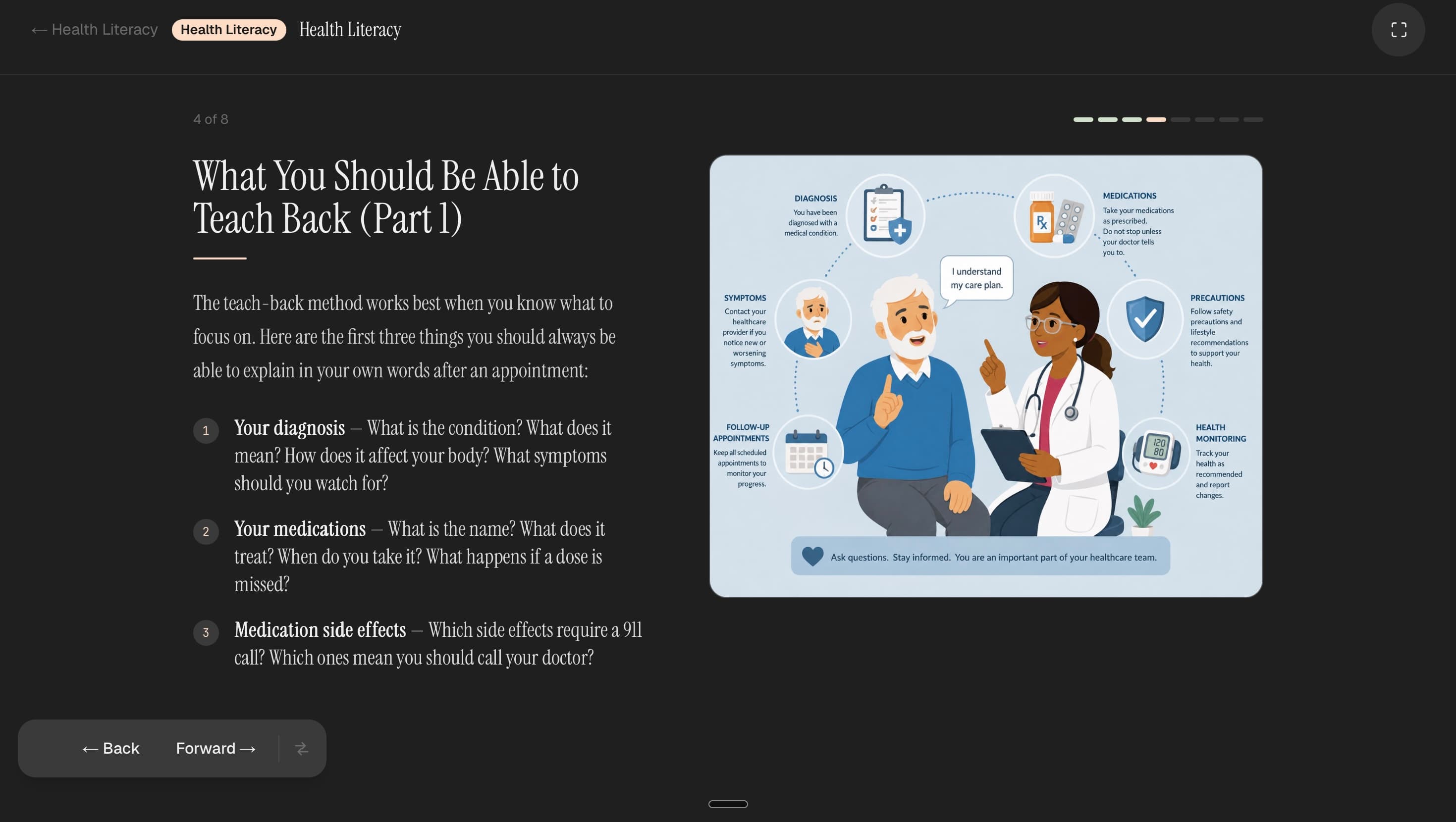
Health Literacy
Practice the skills that make appointments productive: spotting medical jargon, preparing questions, and teaching information back to confirm understanding.
Explore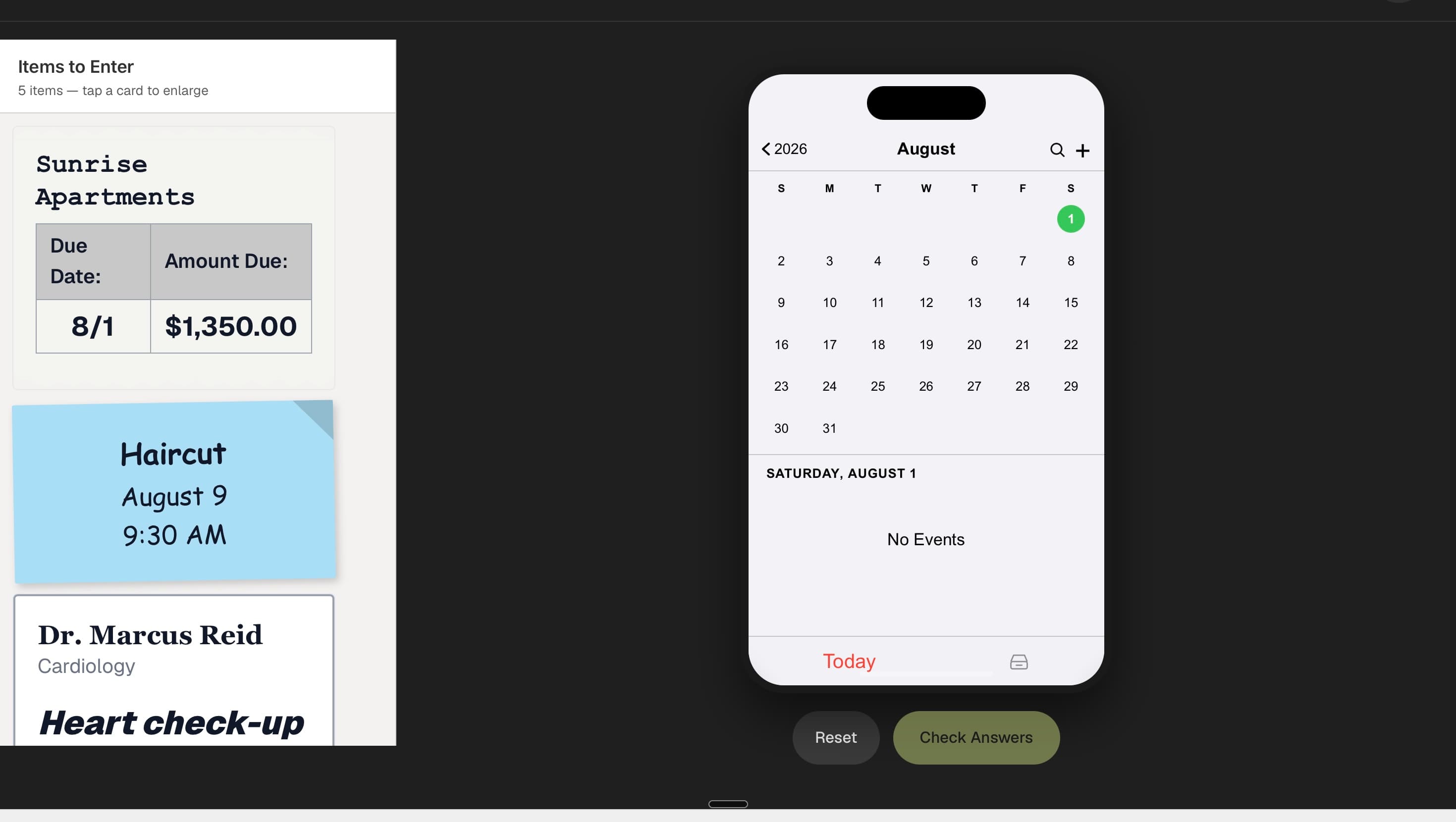
Calendar Organization
Place appointments, events, and bills onto the correct day, either on a weekly paper-style calendar or a simulated mobile calendar, translating real-world dates and reminders into an organized schedule.
Explore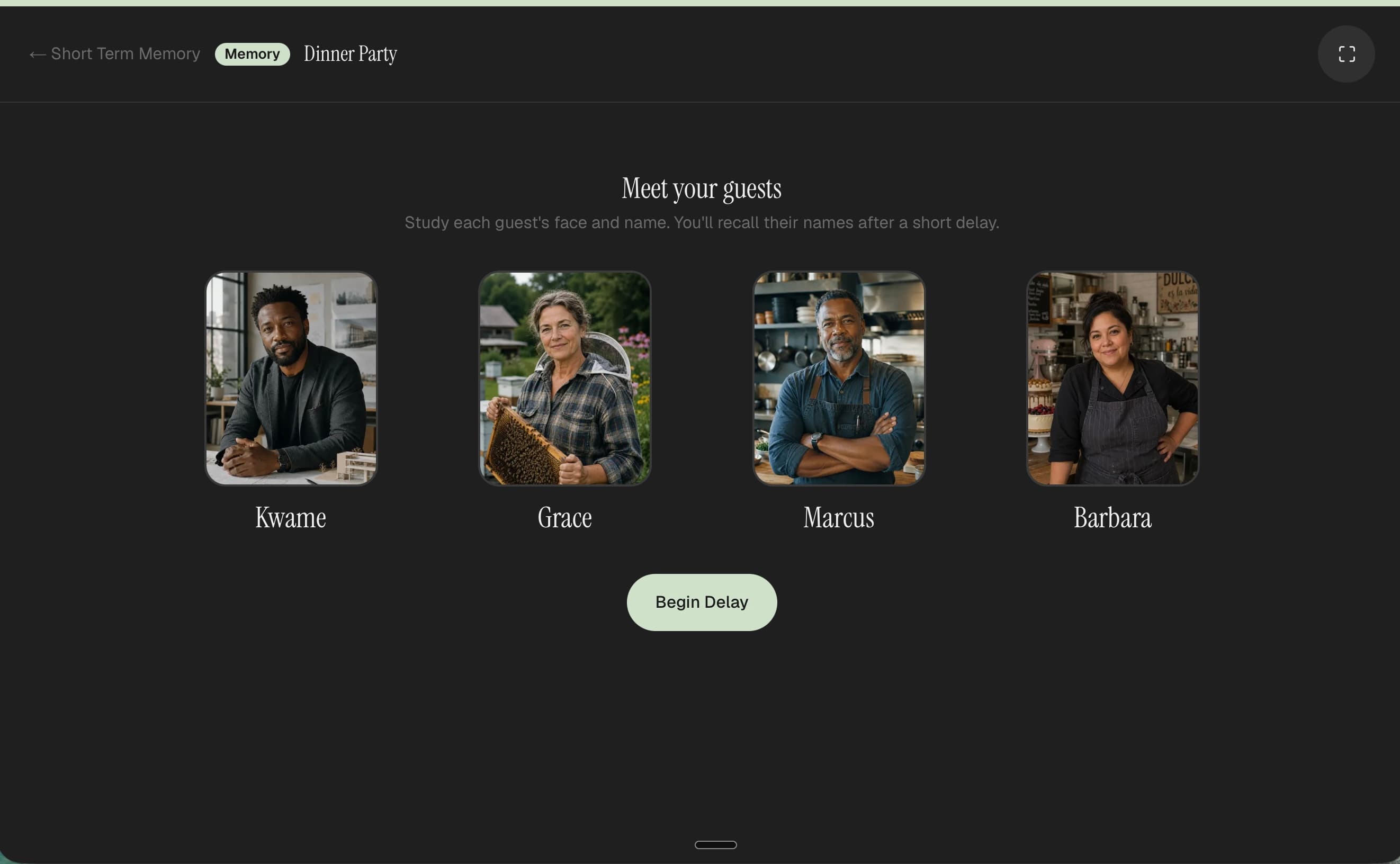
Short-Term Memory
Several ways to practice holding and retrieving information after a short delay, from recalling dinner party guests' names to spaced-retrieval drills and biographical recall.
ExploreFree Functional Cognitive Stimuli is free because I want it to be. But hosting, maintenance, and development have real costs. To keep the lights on, the site carries a small number of advertisements. They’re unobtrusive and never interrupt a session in progress. If you find the site useful, leaving them unblocked is the simplest way to support it.